Your Best Choice for Furnace, AC, Heat Pump Repair in Hope Mills, NC
In the Hope Mills area, Fayetteville Heating and Air is well known for providing exceptional furnace repair, installation, and service. The people we send out to serve you are also top notch, something you'll see in their reviews below. Everyone you deal with at our company has the goal of making sure your experience with us will be so good you'll call us every time you need help. You can feel confident working with Fayetteville Heating and Air because we stand behind our work and comply with all local codes. This is why, as you can see by the map and reviews below, we are rated so highly for Furnace, AC, Heat Pump Repair in Hope Mills, NC. Call us today at (910) 484-2273!
Recent Jobs and Reviews in Hope Mills, NC
Hope Mills, NC at a glance
Fayetteville Heating and Air has completed 6 jobs in Hope Mills, NC in March 2026.
The most recent job was on March 25, 2026.
Fayetteville Heating and Air has completed 6 jobs in Hope Mills, NC in the last 12 months.
Job Locations and Reviews

The technician arrived on site to diagnose a no heat concern on a 2016 package unit. The customer stated that the system was not producing heat. Upon initial inspection, the system was found to be in a lockout condition. The technician reset the lockout and proceeded with a full diagnostic evaluation. During the heating sequence, the igniter energized as expected; however, the burners failed to ignite. Further troubleshooting revealed that the gas valve was not opening to allow gas to flow to the burners, preventing proper ignition and heating operation.
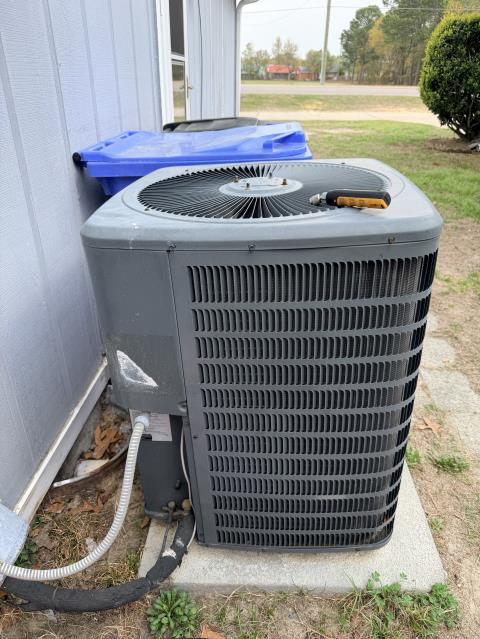
The technician arrived on site today to perform routine maintenance on a 2017 split heat pump system. The customer reported no current issues or concerns with system performance. Service began at the outdoor condenser located on the left side of the home. The system was started and operated in cooling mode to properly evaluate functionality. Refrigerant pressures and temperature readings were checked and found to be within manufacturer-recommended ranges, indicating proper system operation. Electrical amp draws for both the compressor and condenser fan motor were measured and are within acceptable limits. The capacitor was tested and is operating within its rated specifications. All accessible electrical connections were inspected and tightened as needed. The condenser coil was also inspected and found to be clean, allowing for proper heat transfer.
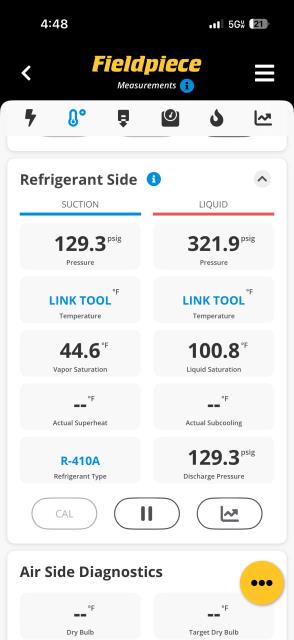
The technician arrived on site today to evaluate system operation in cooling mode following a previous visit during which full testing could not be completed due to low outdoor temperatures. Upon arrival, the system was found to be satisfied. The technician spoke with the customer, who reported hearing a screeching noise coming from within the wall whenever the system starts after being off for an extended period of time.
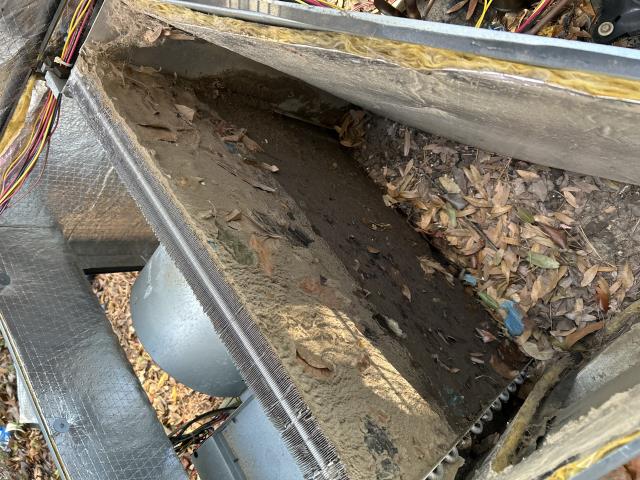

Technician arrived to evaluate a package unit that was freezing up. Found the inlet side of the evaporator coil heavily clogged with debris, causing severe airflow restriction and coil icing. Informed customer that coil cleaning was required before accurate system evaluation. Returned to property and performed full cleaning. Disassembled unit and cleaned indoor and outdoor coils, drain pan, and return compartment. Repaired drain line, reassembled system, and started unit. Checked pressures, temperatures, and amp draw. System operating properly at this time.

Removed existing heat pump split system and associated ductwork. Supplied and installed new Ruud 2-ton heat pump split system, including outdoor condensing unit and matching indoor air handler. Installed new refrigerant line connections, condensate drain, electrical whip, and system safety components as required. Replaced existing duct system with new properly sized supply and return ductwork to improve airflow and system efficiency. Sealed all duct connections and verified proper airflow. Evacuated refrigerant lines, charged system to manufacturer specifications, and performed full start-up and operational testing. Verified proper heating and cooling operation, thermostat communication, and overall system performance.
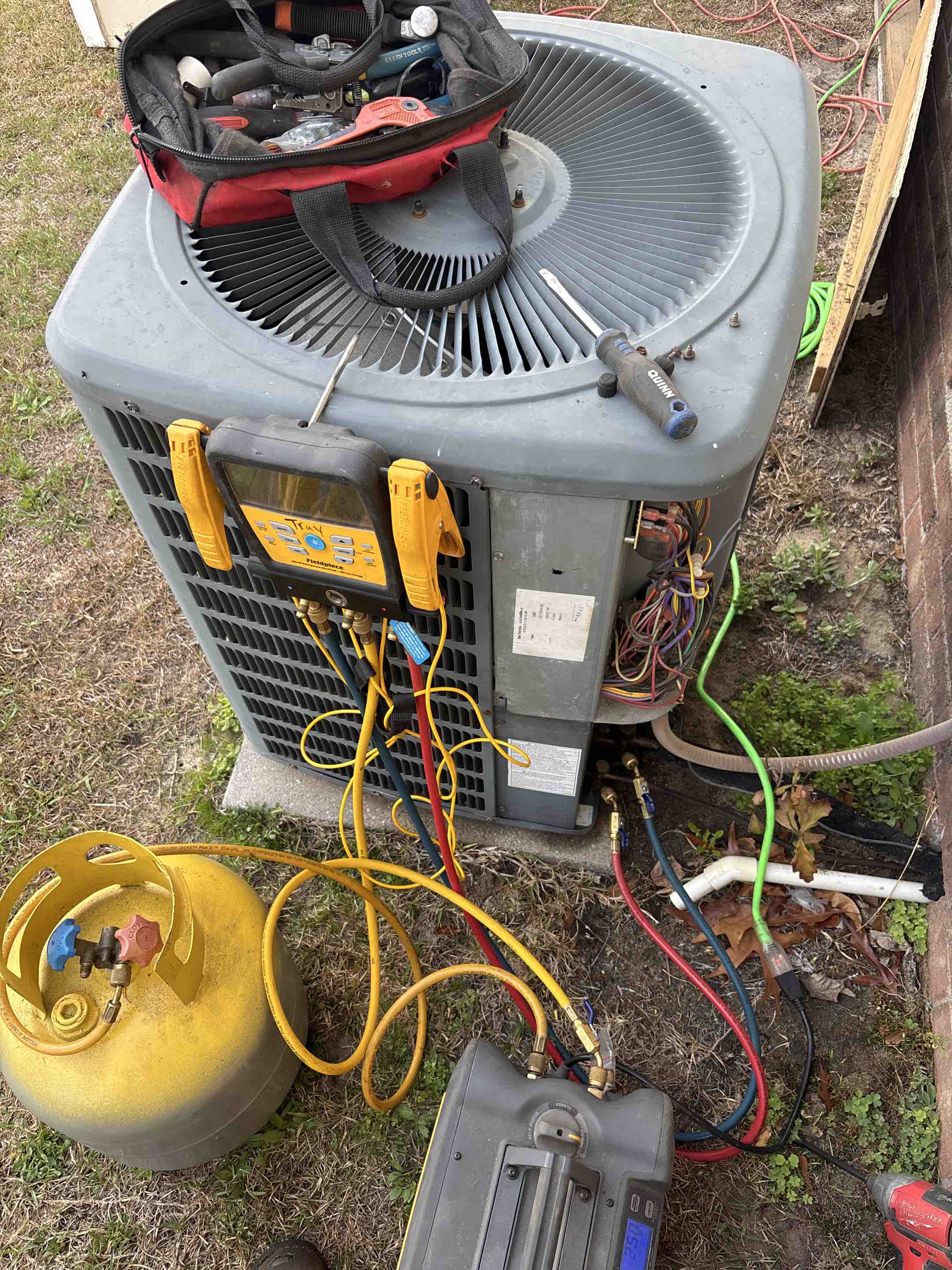

The project began with the careful removal of the existing ductwork, ensuring minimal disruption to the surrounding environment. Each section of old ductwork was meticulously dismantled, taking care to avoid damage to walls, ceilings, and other structures. Insulation was removed and disposed of properly, and old materials were recycled wherever possible. Following the removal, the space was thoroughly cleaned to prepare for the installation of new ductwork. Custom-sized ducts were fabricated and installed, ensuring optimal airflow and efficiency. The new ductwork was sealed and insulated to prevent energy loss and improve indoor air quality. The next day, the focus shifted to installing the new HVAC equipment. This involved precise measurements and secure mounting of the units, followed by careful connections to the newly installed ductwork. System testing was conducted to ensure everything functioned correctly, and adjustments were made as needed. The project concluded with a final in